



How to Polish Artificial Jewellery: Have you seen old necklace in your wardrobe and thought, “This used to sparkle so much”? Then you notice the dull, blackish layer on top. Kind of disappointing, right? But the good news is that instead of throwing it away, most of the time it just needs a good polish.
In this article you know about how to polish artificial jewellery is easier than you think. You don’t need a jewellery shop or special machines. A few things from your kitchen shelf can do the job. I am sharing easy and tested methods that take two minutes but all these steps actually work.
Why Does Artificial Jewellery Lose Its Shine?
Before going to the solution, et us first understand the problem as to why artificial Jewellery lose its shine.
Artificial jewellery is usually made from brass, alloy, or gold-plated metal. These materials react with air, sweat, and moisture over time. That reaction is what causes the dullness or blackish tint.
It’s not always about bad quality. Even expensive imitation pieces lose shine if you don’t clean them regularly.
Also Read: How to Clean artificial jewellery at Home

Things You’ll Need Before You Start
You probably already have these at home:
- Soft cotton cloth or microfiber cloth
- Mild dish soap
- Baking soda
- White vinegar (optional)
- An old, soft toothbrush
- A bowl of lukewarm water
That’s it. No expensive polish required.
8 Easy Ways to Polish Artificial Jewellery at Home
1. The Soft Cloth Method (Fastest Fix)
This works best for daily maintenance, not deep cleaning.
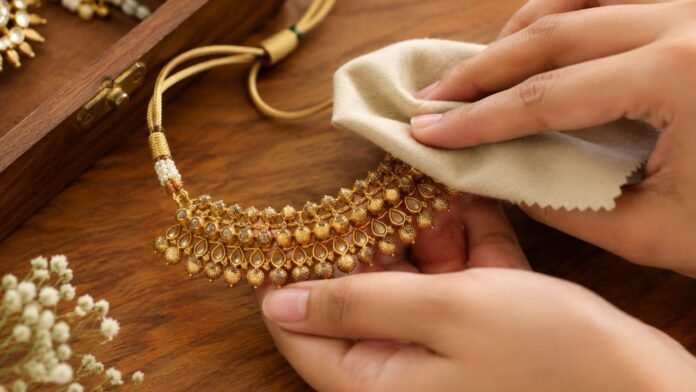
Just rub the jewellery gently with a dry, soft cloth. Do this after every wear. Sweat and oil build up fast, and wiping it off stops tarnishing before it even starts.
Honestly, this one habit alone can keep your jewellery looking new for months.
2. Mild Soap and Water Wash
For pieces without stones or delicate designs, this is a safe option.
- Mix a few drops of dish soap in lukewarm water
- Dip the jewellery for 2-3 minutes
- Gently scrub with a soft toothbrush
- Rinse with clean water and pat dry immediately
Don’t soak it for too long. Water can seep into the plating and damage it faster.
3. Baking Soda Paste
Baking soda is honestly one of the best-kept secrets for polishing artificial jewellery.
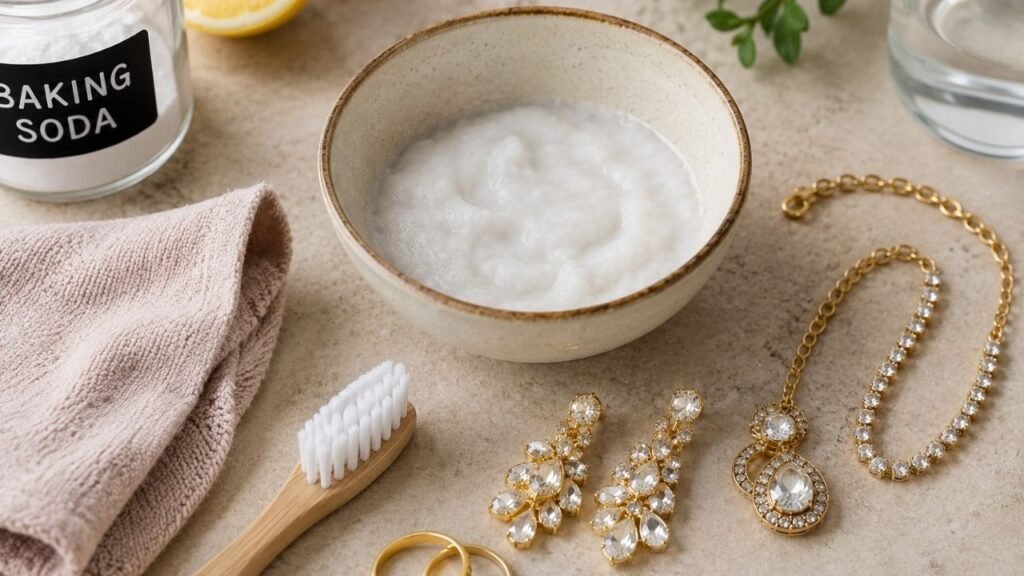
Make a thick paste using baking soda and a little water. Apply it with a soft cloth in circular motions. Wipe off after a minute, then dry the piece completely.
This method works really well for necklaces and bangles that have gone slightly dull.
Also Read: How to Clean artificial jewellery at Home
4. Toothpaste Trick
This may sound strange, but it actually works. Plain white toothpaste (not gel-based) can remove light stains.
Apply a small amount, rub gently, then wipe clean with a damp cloth. Avoid toothpaste with added beads or whitening chemicals, though. Those can scratch delicate metal.
5. Vinegar Dip (For Tough Tarnish)
This step is for jewelry that has really gone dark. Using this step, you can easily restore your jewelry.
Mix equal parts white vinegar and water. Dip the piece for just 1-2 minutes. Not more than that, or it can damage the plating.
Rinse well afterward and dry it completely. This is a stronger method, so use it only occasionally.
6. Aluminum Foil and Baking Soda Trick
This one feels almost magical the first time you try it.
- Line a bowl with aluminum foil
- Add hot water, baking soda, and a pinch of salt
- Drop your jewellery in for a few minutes
- Watch the tarnish transfer onto the foil
It’s science, not magic, but it still feels satisfying to watch.
7. Cornstarch Shine Boost
Cornstarch works great for a quick shine before an event.
Mix a bit with water to form a paste. Rub it gently on the surface, let it sit for a minute, then buff with a dry cloth. Simple, fast, and effective.
Also Read: How to Store Artificial Jewellery: 9 Easy Tips That Work
8. Rubbing Alcohol for Quick Touch-Ups
A cotton swab dipped in rubbing alcohol works well for tricky corners and detailed designs.
This helps remove grime stuck in tiny grooves that a cloth can’t reach. Just don’t overdo it, since alcohol can be harsh with regular use.
What to Avoid While Polishing Artificial Jewellery
- Don’t use hard-bristled brushes. They scratch the plating.
- Avoid soaking jewellery with stones for too long. Glue can loosen.
- Never use bleach or strong chemical cleaners.
- Don’t rub too hard. Gentle pressure works better than force.
Quick Recap: How to Polish Artificial Jewellery at Home
- Wipe daily with a soft cloth
- Use mild soap water for light cleaning
- Baking soda paste for regular polish
- Vinegar dip only for tough tarnish
- Aluminum foil trick for deep stains
- Avoid harsh chemicals always

Polishing artificial jewellery doesn’t need to be complicated. Most methods use things already sitting in your kitchen. The real trick is consistency. A quick wipe after every wear does more than any deep-cleaning session once a month. Trust me, your jewellery will thank you for it.
So next time your favorite earrings look a little dull, don’t toss them aside. Try one of these tricks first. It has high chances, they’ll look almost new again.
Got a jewellery box full of dull pieces? Pick one method from this list and try it today.
FAQs
1. How often should I polish artificial jewellery?
Wipe it after every wear, and do a deeper clean once every two to three weeks. This prevents heavy tarnish buildup over time.
2. Can toothpaste damage artificial jewellery?
Plain toothpaste is usually safe in small amounts. But gel-based or whitening toothpaste with beads can scratch delicate plating, so avoid those.
3. Is vinegar safe for all artificial jewellery?
Not always. Vinegar works well for tough tarnish, but it can be harsh on jewellery with stones or fragile plating. Use it sparingly and rinse well.
4. Why does my jewellery turn black so quickly?
This usually happens due to sweat, perfume, or moisture exposure. Storing it properly and wiping it after wear slows this process significantly.

